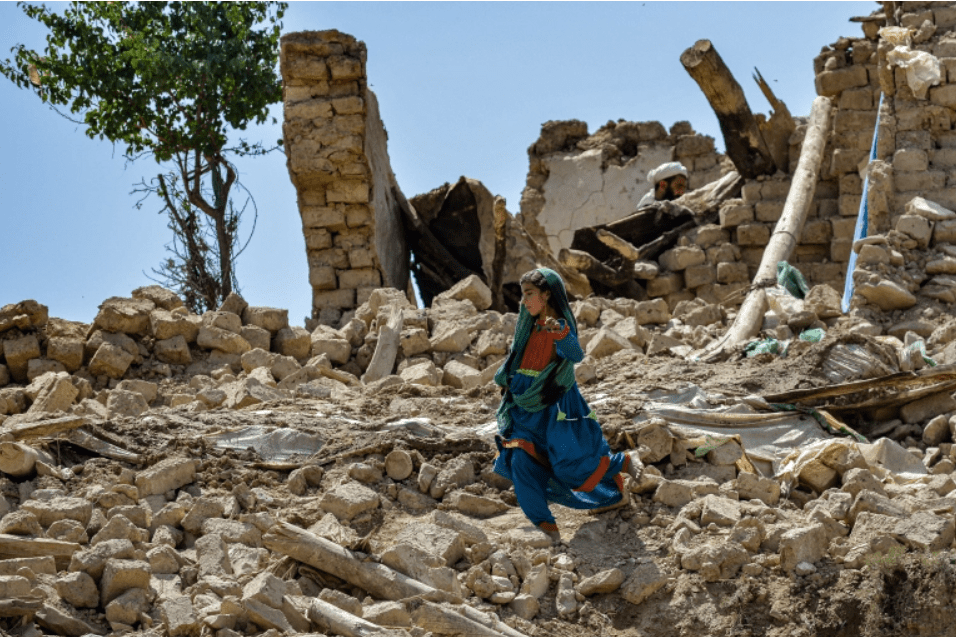
After an earthquake of magnitude 6.1 occurred near Khost in Afghanistan, there have been reports of over 1,000 casualties with an additional 1,500 injured. However, in the wake of this tragedy, women in Afghanistan have faced extreme limitations to their human right to healthcare. The Taliban government currently presiding over Afghanistan has issued rules where women are unable to receive healthcare from a male worker, and in some parts of the country, they are banned from receiving care at all without a male relative to accompany them. As of right now, possibly life-saving emergency healthcare cannot be performed on female patients unless under very specific conditions which, in the chaos created by the quake, are nearly impossible to achieve: women are expected to be with a male relative to seek treatment that can only be given by a female healthcare professional. Consequently, treatment is practically barred from widows, orphaned girls, or any woman who cannot find a facility with female healthcare workers.
According to the World Health Organization, Afghanistan has the second lowest concentration of healthcare professionals per population density in the Eastern Mediterranean, with only 4.6 per 10,000 people. Furthermore, the concentration of doctors and nurses has been decreasing since 2016. This downswing is expected to be even greater for female health professionals, as the Taliban has recently issued legislation entirely banning women from secondary education. Thus, the limits on healthcare following this tragic disaster are only the surface of what is to come: in future emergencies, women will be marginalized or barred completely from receiving treatment unless changes are made.
 Future Female Health
Leave a comment