Image: Lucy Nicholson, Reuters
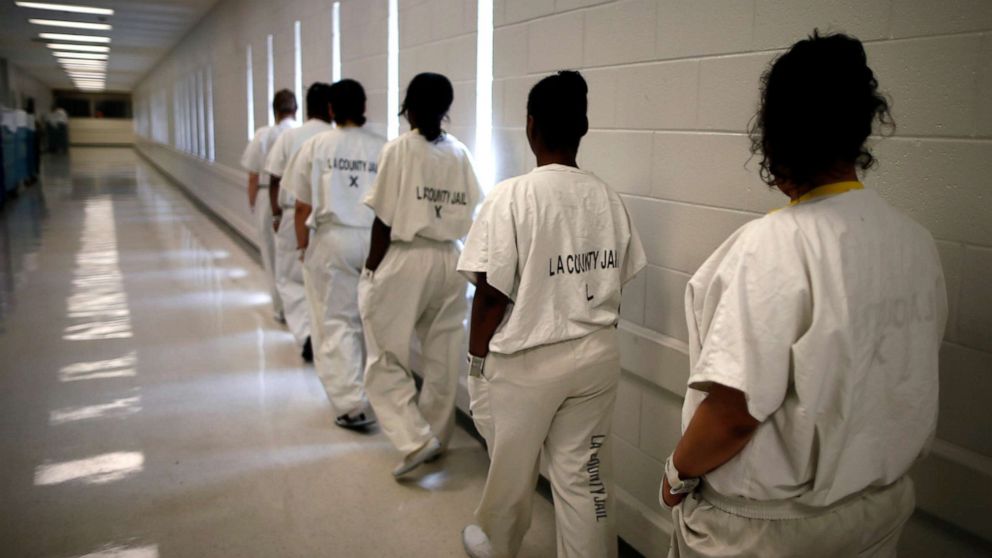
The overturning of the landmark case that has protected the right to a safe abortion in the United States for almost 50 years has been a shocking setback for women’s reproductive rights across the country. States have exerted their own power over the right to an abortion, with bans arising in multiple states and the removal of state protections in many others. However, this new and frightening position that female-bodied persons have been forced into is likely to be a much steeper precipice for a rapidly growing and critically at-risk group: the incarcerated.
According to a study based on incarceration statistics from the U.S. Department of Justice, the incarceration of women in the United States has increased at a rate that is twice that of the incarceration of men. But incarcerated women make up only a fraction of women under U.S. correctional systems, with more than three times that amount either on probation or on parole, both of which involve travel restrictions. With the 58,000 pregnant women that are expected to be incarcerated every year, reproductive care has already been nothing short of a nightmare: a 2021 study showed that only half of state prisons allowed abortion in the first or second trimesters, and two thirds of state prisons that allowed abortion required the prisoner to pay for treatment. Women who don’t receive an abortion are oftentimes forced to give birth in their own cells or in solitary confinement. Horrifyingly, in states where the practice is not yet banned, women are often shackled to their own beds while in labor, most times in a position that is not conducive to birth.
States in which women’s incarceration has increased over the past decade, such as Michigan (30% increase since 2009), Idaho (25% increase since 2009), Texas, Kentucky, Missouri, Tennessee, North Dakota, and Ohio are planned to create or uphold bans on abortion. These women will have what little reproductive rights left stripped away from them and will likely be forced to give birth in the same shockingly dehumanizing way as they have in prisons over the past decade. Additionally, women on probation or parole in a location where abortion has been declared illegal will find themselves stuck, unable to traverse state lines.
Women in the carceral system, who have already lost virtually all of their human rights and bodily autonomy in the face of federal disregard and state and local legislation, face even more horrific circumstances in the wake of the Roe v. Wade reversal. Now more than ever, in the midst of ignorance and cruelty, they deserve to be fought for.
 Future Female Health
Leave a comment