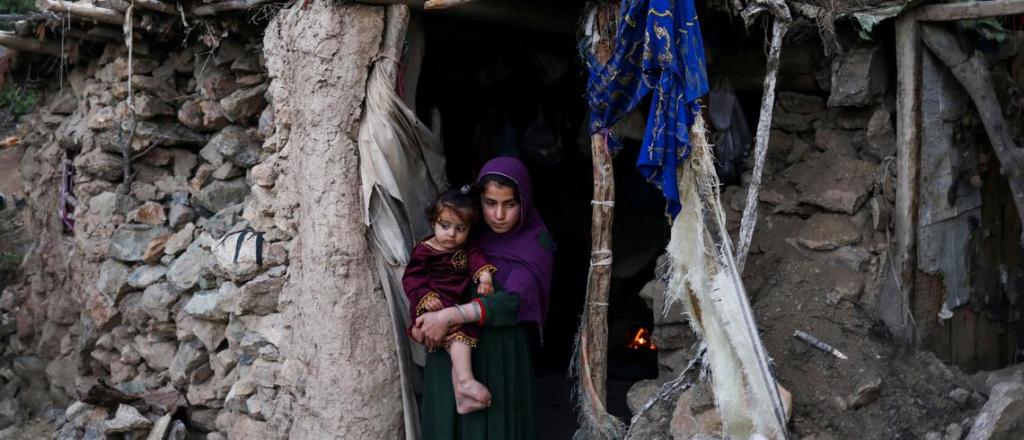
Photo: Reuters
In June of 2022, a earthquake of record magnitude hit Afghanistan; sources estimate that about 20,000 women have been injured or displaced in a place where the Taliban’s hold on the central government is already placing restrictions on female healthcare. About 2,000 women affected by the disaster are pregnant, and in the next three months, more than 600 women in the region will be expected to give birth in the rubble with an extreme shortage of reproductive care resources to aid them. Afghanistan already has one of the highest rates of maternal mortality in the world, with an average of 638 mothers per every 100,000 dying due to complications related to childbirth; this number is projected to jump to an astounding 963 mothers per 100,000 after the disaster (for perspective, the maternal mortality rate was 8.3 in Canada and 17.4 in the United States in 2018).
This earthquake has not only shaken the physical infrastructure of Afghanistan: the event, combined with the Taliban government’s increasingly oppressive policies, will likely cause a steep increase in gender-based violence, unplanned pregnanices, and home births, all of which pose a grave threat to the livelihoods of Afghani women.
After the United Nations meeting following the earthquake in June, the UN Population Fund has created a flash appeal for 251.9 million dollars in order to support efforts in Afghanistan. Through this, they hope to run up to 1,500 family health houses throughout the region, in comparison to the the mere 172 houses present before the earthquake occurred. In addition, they plan on creating 169 new protection centers for gender-based violence and expanding their midwifery hotline (a toll-free number that provides instruction and guidance for midwives and others on duty) from 4 lines to 8. However, as of the 27th of July, only about one fifth of that amount has been collected.
 Future Female Health
Leave a comment